



 Previous
 Back
 Next
An LED holographic display is one of the most loosely used terms in our industry. Buyers use it for a transparent screen on a shopfront window, a see-through stage effect, and sometimes for something closer to a projected illusion. Before a specification can be written, the term has to be pinned down. This guide explains what we mean by an LED holographic display, how it differs from the neighbouring product lines, and which project inputs actually change the design.
As with our other display products, we do not publish fixed performance figures for a generic unit. Pitch, format, mounting and content treatment are engineered per project. The figures in this article are individual delivered specifications from our project record, not a range of available options. Where the record does not state a number, we leave it out rather than fill the gap with an estimate.
What Holographic Means in an LED Specification
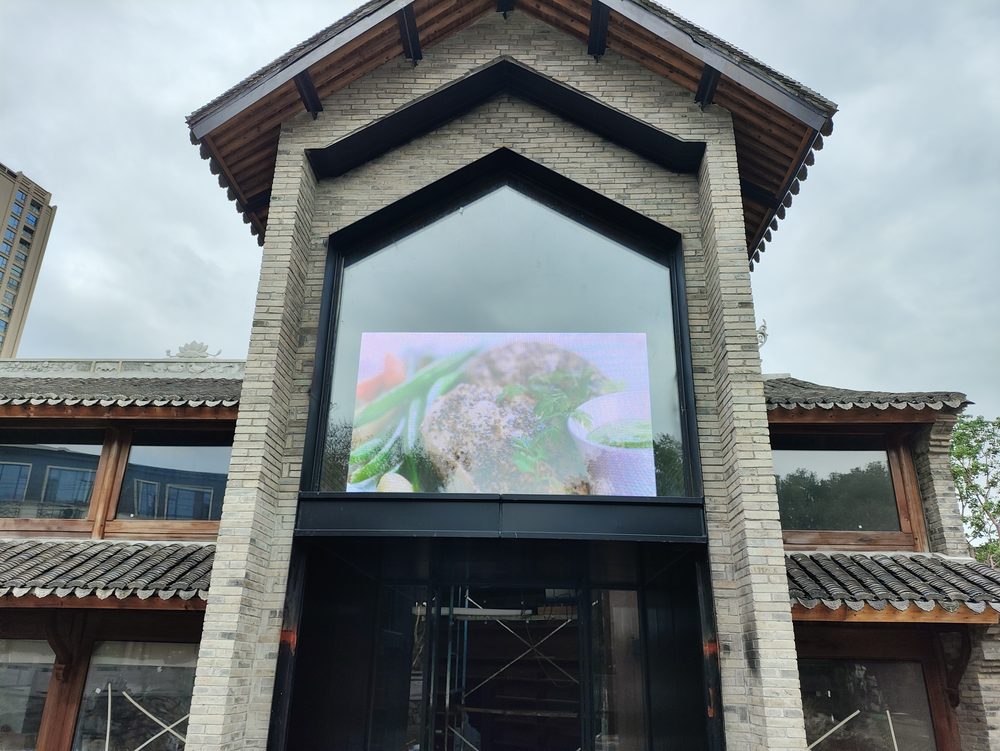
In display terminology, a holographic LED screen is a see-through LED display: emitting elements sit on a transparent or very open carrier, so a viewer sees the image and, behind it, the space or the object on the other side of the glass. It is not a volumetric projection and it does not create an image in mid-air. The effect that people call holographic comes from the combination of a bright emissive image and a visible background, with content designed to make the two layers read as one scene.
That distinction matters commercially. If a client expects a free-floating three-dimensional object, an LED screen is the wrong technology and the proposal will disappoint. If the client wants a shopfront that stays transparent while showing motion graphics, or a stage layer that lets the set behind it remain visible, a see-through LED display is exactly the right tool. We spend time on this conversation early because it is cheaper than a redesign after the glass has been ordered.
The terminology also overlaps with our other product families. A holographic LED transparent screen, a standard indoor transparent screen and an LED mesh screen can all produce a see-through image. They are specified differently, and the rest of this article is about those differences. Treating them as interchangeable is the fastest route to a proposal that looks convincing on paper and cannot be installed.
Choosing Between Holographic, Transparent and Mesh
A holographic screen is typically chosen when the glass itself is part of the design: a storefront, an atrium, a display case or a stage window where the audience should remain aware of what is behind the image. A transparent LED screen is the more general category, available in indoor, outdoor and adhesive formats, and it is often chosen when transparency has to be balanced against daylight and viewing distance. A mesh screen is the open-structure option for large stages and building facades, where wind load and rigging dominate the design.
A practical way to decide: if the panel is mounted on or against glazing and the viewer may be only a few metres away, start with the transparent or holographic families. If the surface is tens of metres across and hangs from a truss or a facade frame, start with mesh. If the screen is going to be walked on, or built as a matrix of light points, say so at the outset, because that is a different structural design even when the visual result looks similar from the audience side.
Curved interior projection surfaces are a separate product family with a separate engineering path; they do not share a specification process with see-through displays. We raise this because the word immersion gets applied to both, and a brief that mixes them usually produces a specification nobody can build. If you are unsure which family your project belongs to, describe the surface and the viewing position rather than the effect you are hoping for, and we will tell you which route fits.
The Glass and the Mounting Condition
A see-through LED display is only as good as the surface it is attached to. Before we propose anything, we need to know the glazing: its size, its framing, whether it is laminated or coated, and where the panel joints fall. A screen that looks perfect in a rendering can be impossible to install if the mullion spacing does not match the cabinet layout, or if a coating changes how the image reads from the street. These are architectural details, and they belong in the first conversation rather than the last.
The second question is the load path. Some installations hang from the top edge; others sit on a frame behind the glass; adhesive film formats bond directly to the glazing and shift the conversation to the condition and terms of the glass itself. Each route has different implications for cable routing, ventilation and how a technician reaches the back of the display. We do not quote a universal weight or transparency figure, because both depend on the format and the pitch selected for that project.
Power and signal routes are the part most often left out of an architectural drawing. A transparent screen in a finished retail space has nowhere to hide a cable tray, so the route has to be agreed with the fit-out contractor before the glass is closed. On a stage build, the equivalent problem is where the distribution sits during a show with moving scenery. Both are coordination questions, not product questions, and both are far easier to settle while the drawings are still open.
Content Is Part of the Specification
A see-through display shows its background as well as its image, which changes how content should be made. Full-frame bright footage can flatten the effect; content built around dark fields, high-contrast graphics and controlled motion tends to read better while preserving the sense of depth. That is a production decision, and it belongs in the brief alongside the hardware. A content team that is handed a finished screen and told to make it look three-dimensional has far less room to work than one that was involved during design.
The playback chain matters too. We need to know the source resolution, the frame rate, whether the show is triggered by a timecode or a live operator, and whether other screens on the same set have to stay in sync. If the project includes a physical object behind the glass, such as a product, a costume or a set piece, the content team should see it before the final mapping is locked, because the alignment between the physical and the digital layer is the whole effect.
None of this requires us to invent a brightness number. We specify the playback and content requirements per project, then verify them on site during commissioning under the actual lighting conditions. A screen that looks convincing in the finished space is the acceptance criterion, not a figure on a datasheet measured in a laboratory. That is also why we ask for site photographs and a lighting plan at the briefing stage rather than after the order.
Confirmed Holographic Screen Projects
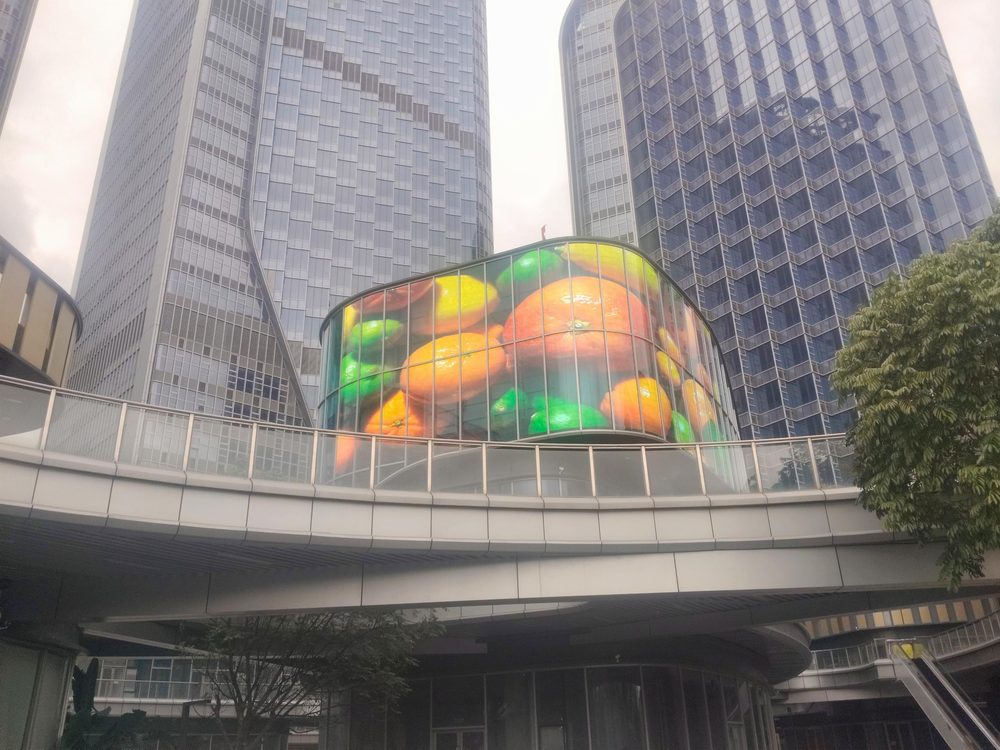
| Year | Project | Location | Confirmed pitch |
|---|---|---|---|
| 2023 | Wujie Chang'an production (holographic, shadow-puppet and transparent ice screens) | Xi'an, Shaanxi | P3.91 |
| 2024 | 2nd Hainan Dongpo Culture and Tourism Conference | Danzhou | P3.91 |
| 2025 | An OCT cultural-tourism park | Shenzhen | P6 |
| 2025 | A creative-industry park (350 m虏) | Shanghai | P10.4 |
These are four separate delivered specifications, not a product ladder. The Xi'an production combined a P3.91 holographic screen with a shadow-puppet screen and a transparent ice screen in the same show, which is a useful reminder that a single production can legitimately use several display formats at once. The Shanghai project is the only one in this group whose project record states an area; we do not infer areas for the others.
All of the projects above were delivered by Luminatii Technology Co., Ltd. Our project references cover the wider portfolio, and the product catalog lists the other see-through formats. If you are comparing formats for a specific window or set, the project closest to yours in viewing distance is more useful than the one closest in year.
A Short Specification Checklist
- What the audience should see behind the image, and from how far away.
- Glazing details: dimensions, framing, coatings and joint positions.
- The mounting route: hung, framed, or adhesive film on the glass.
- Power and signal paths, agreed with the fit-out or production contractor.
- Content treatment: dark-field graphics, motion design and any physical objects behind the screen.
- Playback, resolution, frame rate and synchronisation with other screens.
- Service access to the rear of the display during the operating period.
- Who signs off the mounting and the glass condition.
Eight items is enough to start. The most common failure we see is a brief that specifies the screen but not the glass; the second most common is a brief that specifies the content but not the playback chain. Both are cheap to fix at the briefing stage and expensive to fix after fabrication, which is why we would rather receive an incomplete brief early than a polished one late.
If you are considering an LED holographic display for a window, a stage layer or an exhibition, begin with the holographic LED screen product page and send us the glazing and viewing information above. Technical notes and downloads are on our support downloads page, or contact our team to discuss the project directly.


